RailKhoj Platform
Railway information platform built to simplify train travel across India, bringing live GPS telemetry, next-station weather, and terrain guides into one intuitive experience.
Web Platform & Mobile Interface
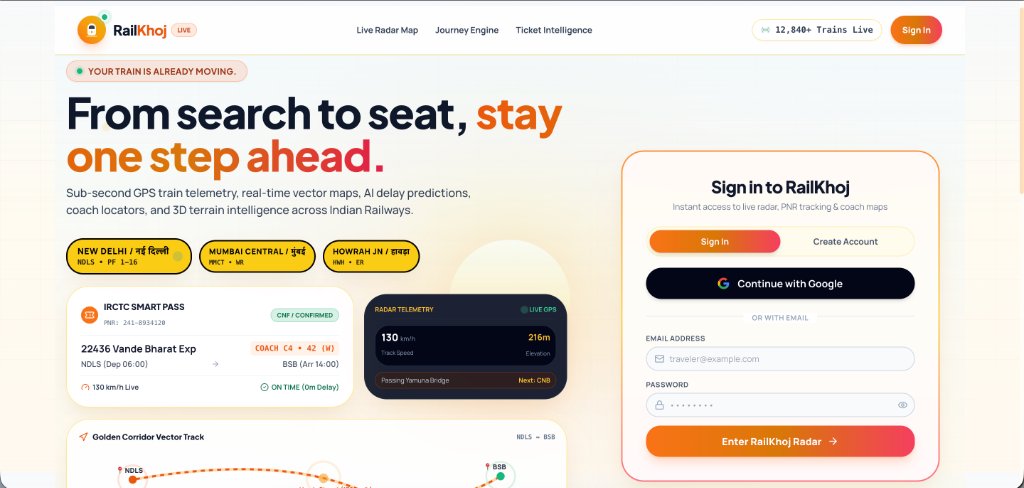
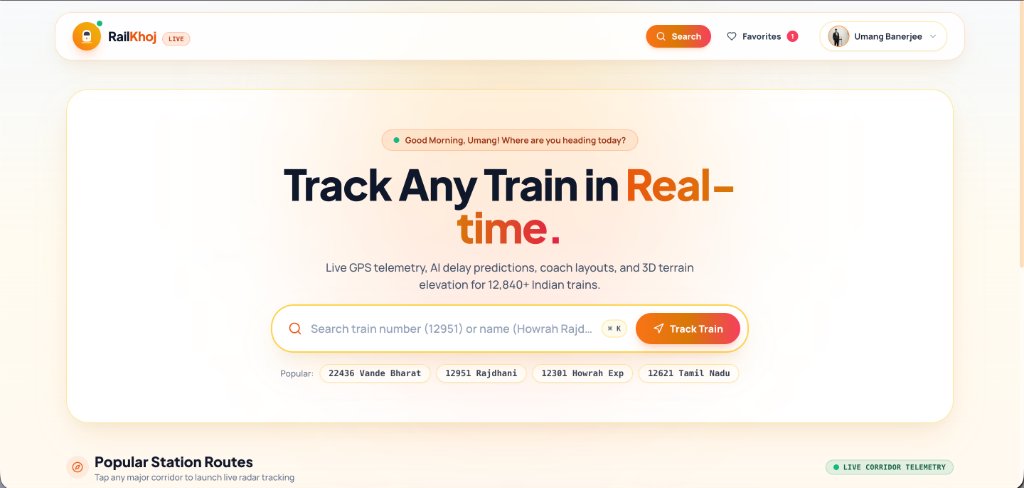
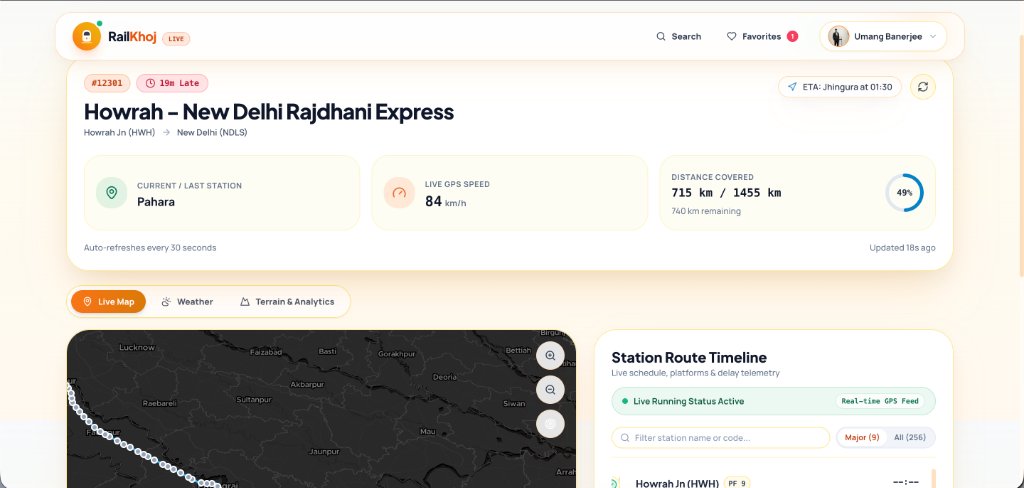
Cluttered Ad-Heavy Trackers
Existing railway apps bombard travelers with intrusive banner ads and pop-ups while checking urgent platform or delay status.
Clean, zero-ad interface prioritizing live running status, GPS speed, and station distance at a glance.
Unpredictable Journey Delays
Static timetables fail to warn passengers about cascading delays, upcoming weather disruptions, or terrain slowdowns.
Dynamic delay tracking with auto-refreshing 30-second telemetry and next-station weather forecasts.
Poor Mobile Connectivity Inside Trains
Heavy web pages fail to load over spotty cellular network corridors along remote railway tracks.
Optimized Next.js bundle with aggressive client caching and fast-rendering station timelines.
| Considered Feature | Why We Rejected It (Ifs & Buts) | What We Shipped Instead |
|---|---|---|
Intrusive Ad Networks & Pop-ups | Commercial ad networks compromise speed, drain user battery, and frustrate travelers needing emergency train status. | Pure utility-first layout with clean high-contrast station typography and zero ads. |
Heavy 3D WebGL Map Tiles | 3D map engines consume massive mobile data and overheat devices on low-bandwidth rail journeys. | Lightweight 2D vector corridor maps and station route progress bars. |
Mandatory Login Before Train Search | Forcing users to sign in before searching train numbers creates unnecessary friction for urgent lookups. | Instant guest train lookup with optional account sign-in for saved routes and IRCTC Smart Pass. |
Continuous WebSockets for Inactive Routes | Maintains open socket connections for millions of idle users, rapidly exhausting server memory. | Adaptive 30-second HTTP polling on active train screens with automatic idle pause. |
Commercial ad networks compromise speed, drain user battery, and frustrate travelers needing emergency train status.
Pure utility-first layout with clean high-contrast station typography and zero ads.
3D map engines consume massive mobile data and overheat devices on low-bandwidth rail journeys.
Lightweight 2D vector corridor maps and station route progress bars.
Forcing users to sign in before searching train numbers creates unnecessary friction for urgent lookups.
Instant guest train lookup with optional account sign-in for saved routes and IRCTC Smart Pass.
Maintains open socket connections for millions of idle users, rapidly exhausting server memory.
Adaptive 30-second HTTP polling on active train screens with automatic idle pause.
Architectural Trade-offs
Server-side caching for high-frequency train telemetry queries
Why: Prevents upstream API throttling during peak commute hours and guarantees sub-second response times for users.
Trade-off: Demanded careful cache invalidation with 30-second TTL windows for active trains.
Lightweight vector route maps over bloated third-party embeds
Why: Heavy map embeds cause sluggish scrolling and high data usage on mobile networks inside train coaches.
Trade-off: Required custom SVG route timelines and station elevation charts.